Wednesday, February 16, 2011
New home for Business Transformation
Officially as of March 2nd, 2011, now with a broader Business Transformation approach, this site has been migrated over to: http://www.XOVATION.net. Please visit or contact me (512) 299 3637


Sunday, March 29, 2009
A future for humanity
(as it relates to technology primarily)
The input devices of the future are a big aspect for sure. What MIT is showing now is “really early stage” and would have many real world barriers. The flip side to Maes is Ben Schneiderman and their information design debate rages on around agents vs. direct manipulation. Pattie is still on the agents side (as was my Masters thesis) but she has moved towards direct manipulation interfaces.
I keep coming back to Carly Forina from HP’s comments about the future being: digital, virtual, personal and mobile.
That is also what I believe. So, thinking about it, the sixth sense that they talk about at TED is really just another implementation of the “WKID” meme in a very practical tangible sense.
My take on “what’s next” is a blend of:
- More immediate input devices relying only on basic human gestures and interactions
- Limitless storage and connection of data in the Cloud
- Semantic Web (3.0) where human connections have deeper personal meaning – as web2.0 dies off we are already seeing super simple but super meaningful interfaces (like twitter for example) start to construct new meaning
- Web 4.0 where we send out ideas and tasks come back (I actually have done some work on this if you’d like the full hypothesis ;)
Basically, to build the future, there no longer exists an idea of catching up or of getting ahead of the curve or indeed modernizing any more. There is just too much going on (Data and Information). What is HUGELY lacking (and therefore lucrative) is Knowledge and Wisdom. There are many times fewer pieces of W & K than there are I & D. The business will be found in filtering the correct signals from the hyper-inflated noise. BUT, Social Media is about the social not the media AND the difference between the focus of the WK aspects and the ID aspects is the transfer of core ownership from the system to the human.
We need to BE ahead, not get ahead. A quantum leap….or at least a few of us could go there and scout it out.
What do YOU think? Please comment/share/tweet etc ;) Thanks, I'm listening....
Saturday, January 17, 2009
The meaning of life
Passion AND Purpose....perhaps? Here are some "memes" to consider:
People to read:
Po Bronson
Tony Robbins
Dr Wayne Dyer
In the wider world of religion
The purposes of a Hindu's life are Dharma, Artha, Kharma, and Moksha.
- What will be on your epitaph?
- Connecting with others - how and why?
- Reality shocks - are we all in a state of shock right now?
- The supple bend in the strong wind - only the flexible will survive
- Multi-threading existence - now many threads...strands...personas could/should we persist?
- Make and mind the gaps - it's the space between "the stuff of life" that builds reality not the stuff itself
- Only do what you do best and enjoy, but do it better and more often
People to read:
Po Bronson
Tony Robbins
Dr Wayne Dyer
In the wider world of religion
The purposes of a Hindu's life are Dharma, Artha, Kharma, and Moksha.
- Dharma is the fulfillment of one's purpose;
- Artha is prosperity.
- Kharma is desire and enjoyment and
- Moksha is of course, enlightenment.
Buddhism talks of The Noble Eightfold Path
In order to fully understand the noble truths and investigate whether they were in fact true, Buddha recommended that a certain lifestyle or path be followed which consists of:
1. Right Understanding
2. Right Thought
3. Right Speech
4. Right Action
5. Right Livelihood
6. Right Effort
7. Right Mindfulness
8. Right Concentration
Sometimes in the Pali Canon the Eightfold Path is spoken of as being a progressive series of stages which the practitioner moves through, the culmination of one leading to the beginning of another, but it is more usual to view the stages of the 'Path' as requiring simultaneous development.
The Eightfold Path essentially consists of meditation, following the precepts, and cultivating the positive converse of the precepts (e.g. benefiting living beings is the converse of the first precept of harmlessness). The Path may also be thought of as a the way of developing ala, meaning mental and moral discipline.
In tougher times, do we need to dig deeper into "meaning"?
Monday, January 05, 2009
Twits - the ruling class of 2009
10 Ways Twitter Will Change Blog Design in 2009 and/or the Wooooorld.
Get them all and try them out or read Macworld's review of Twitter Apps for the iphone
Insert URLs in tweets from the iphone using Twitfire
To have other people do your tweetin' work for you, just use twitthis:
Get them all and try them out or read Macworld's review of Twitter Apps for the iphone
Insert URLs in tweets from the iphone using Twitfire
To have other people do your tweetin' work for you, just use twitthis:
TwitThis is an easy way for people to send Twitter messages about your blog post or website. When visitors to your website click on the TwitThis button or link, it takes the URL of the webpage and creates a shorter URL using TinyURL. Then visitors can send this shortened URL and a description of the web page to all of their friends on Twitter.
Thursday, December 25, 2008
Party like it's 2009!
USA newspaper informs us of Anniversaries and festivals to follow next year.
Big anniversaries and festivals offer yet another reason to travel in 2009. And, since many such celebrations include free events, it's a great way to get more for your money. Just remember to book accommodations early, since the events are likely to draw crowds.
Major anniversaries in 2009 include:
• 500th anniversary of Henry VIII's ascension to the throne. Expect major festivities at Hampton Court Palace and beyond.
• 250th anniversary of Kew Gardens. Special exhibitions will commemorate the event.
• 20th anniversary of fall of the Berlin Wall in Germany. There will be special exhibitions, memorials, tours, and walks. The Czech Republic and other Eastern European countries will also celebrate the 20th anniversary of the fall of communism in 2009.
• Alaska's 50th anniversary of Statehood. The Alaska Railroad is offering a free one-day pass anywhere the train travels to anyone who will turn 50 in 2009.
• Missouri Botanical Garden's 150th anniversary. One of the top botanical gardens in the world, it's also the oldest public garden in the U.S.
• 400th anniversary of Bermuda. The island will celebrate with special events.
• 200th anniversary of Edgar Allen Poe's birth. Baltimore is celebrating with Nevermore 2009, a year-long citywide festival.
Major festivals in 2009 include:
• Manchester International Festival 2009: The second biannual festival features original and new works of performing, music, and visual art.
• Homecoming Scotland 2009: Scotland is celebrating the 250th anniversary of Robert Burns' birth and Scotland's contributions to the world, including golf, whiskey, and Scottish heritage. Events take place all year.
• July 2009 XXV Song Celebration in Tallinn, Estonia: Estonia has a proud heritage of massive singing festivals, the next of which takes place from July 2 to 5.
• Holland Art Cities: Boasting more art and culture per square mile than anywhere else on earth, the two-year Holland Art Cities is an event hosted by ten of the top museums in four of Holland's largest cities. Two museums (including the Hermitage Amsterdam) will open as well.
• Around the world, demand is down and destinations are pushing hard for more visitors, so unusually good deals should be easy to find, at least through the first half of 2009. These and other emerging destinations provide added value since they tend to be even more affordable than more popular, established destinations. If you're looking for an affordable vacation in the coming year, an up-and-comer could be just the ticket.
Tuesday, December 09, 2008
Email is dead.
Or rather it has simply atrophied but ironically due to over- rather than under-use. So sad to see folks still trying to make email do what they need it to do within so many corporations when facebook, twitter, blogs and a host of other media do a much better job of getting the message out and getting decisions made. The kids know and some smarter adults like Don Tapscott of ngenera know too. Unfortunately human face-to-face communication and the art of true meaningful conversation might be on its deathbed too.
THINK. What is the purpose of the emails you send? The underlying purpose?
What else?
We have the newer, better, more timely, more direct, more useful technologies now that let us do all of the above in a much more human way...not stilted by structure...freedom to publish whatever and whenever you want and let the world filter it via profiles, filters, rss, tags and all the other meta-information out there,
THE FUTURE: Sending out ripples of what you specifically need and having that coming back to you in waves. Some would say that's here (I hear y'all, geeks! ;) but not in the true informational sense.
THE FUTURE + Not sending out anything but having a system match you with what you need based on what you do and deliver that to you.
THE FUTURE ++ Sending simple commands that live in an online OS that generate the systems that you will need in the future based on what EVERYBODY is doing...a twitter command line ;)
Or rather it has simply atrophied but ironically due to over- rather than under-use. So sad to see folks still trying to make email do what they need it to do within so many corporations when facebook, twitter, blogs and a host of other media do a much better job of getting the message out and getting decisions made. The kids know and some smarter adults like Don Tapscott of ngenera know too. Unfortunately human face-to-face communication and the art of true meaningful conversation might be on its deathbed too.
THINK. What is the purpose of the emails you send? The underlying purpose?
- To communicate widely and poorly usually,
- to send attachments
- to create a record to refer back to,
- to let folks know what is going on or
- to ask what's going on
What else?
We have the newer, better, more timely, more direct, more useful technologies now that let us do all of the above in a much more human way...not stilted by structure...freedom to publish whatever and whenever you want and let the world filter it via profiles, filters, rss, tags and all the other meta-information out there,
THE FUTURE: Sending out ripples of what you specifically need and having that coming back to you in waves. Some would say that's here (I hear y'all, geeks! ;) but not in the true informational sense.
THE FUTURE + Not sending out anything but having a system match you with what you need based on what you do and deliver that to you.
THE FUTURE ++ Sending simple commands that live in an online OS that generate the systems that you will need in the future based on what EVERYBODY is doing...a twitter command line ;)
Sunday, December 07, 2008
Agile user experience engineering
I think I can rightly say Cooper has done it again with a finely balanced agile+ux presentation from Agile2008 on how developers and logical interaction designers (IAs + visual designers + design technologists) are really all after the same thing...ACCEPTANCE by the client and the users they are subsequently delivering to. A list apart also does a sterling summarizing job; the presentation list of which is below:
Presentations:
I think I can rightly say Cooper has done it again with a finely balanced agile+ux presentation from Agile2008 on how developers and logical interaction designers (IAs + visual designers + design technologists) are really all after the same thing...ACCEPTANCE by the client and the users they are subsequently delivering to. A list apart also does a sterling summarizing job; the presentation list of which is below:
Presentations:
- Leisa Reichelt, Waterfall bad, Washing machine good [mp3] — presented at dConstruct 07.
- Jeff White & Jim Ungar, User Interface Design in an Agile Environment: Enter the Design Studio — presented at Interaction08.
- Alan Cooper’s The wisdom of experience — keynote at Agile 2008.
- Maria Guidice, Can’t we all just get along? Human-Centred Design meets Agile.
Finally, the IxDA and Agile Usability lists frequently discuss the issue of Agile design.
Great strides forward in this nascent debate and practice.Sunday, November 16, 2008
Saturday, October 11, 2008
A beautiful future?
Thanks to my "e-friend" Tom Atlee and in relation to the looming financial crisis (?) which I have begun to think about in earnest these last few days, I received the following brilliant article by Charles Eisenstein, author of the Ascent of humanity.
Essentially it asks: "Given what's coming, what is the most beautiful thing I can do?"
Here's a key paragraph:
This all in turn reminded me of the actual secondary currency of countries such as Bali where there is an actual fiscal currency but also a bartered exchange system for services regardless of actual value. In fact, my friend, Rich Vazquez, has a highly innovative time exchange system already up and running in Austin, Texas.
"Time Banking" as it is commonly called, is a program that has been growing for over 25 years. It is inspired by concepts developed by Edgar Cahn, an attorney, economist, and pioneer of social change, who had a vision of how communities could empower themselves by looking within to meet one another's needs.
Who knows what the future holds!? I hope though we will still experience something beautiful.
Thanks to my "e-friend" Tom Atlee and in relation to the looming financial crisis (?) which I have begun to think about in earnest these last few days, I received the following brilliant article by Charles Eisenstein, author of the Ascent of humanity.
Essentially it asks: "Given what's coming, what is the most beautiful thing I can do?"
Here's a key paragraph:
"...every time there is an economic recession...This cast my memory back to the way helped each other at home in Ireland when I was growing up - exchanging cabbage for a haircut and helping cut peat turf for a couple of dozen eggs. Those transactions fill my heart to this day (there were levels to the exchange that transcended the common-place) and were, even then, way beyond Web 4.0. (NOTE: My maturation sequence of the control nexus of the web: 1=system, 2=relationship, 3=meaning, 4=soul).
People can no longer pay for various goods and services, and so have to
rely on friends and neighbors instead. Where there is no money to
facilitate transactions, gift economies reemerge and new kinds of money are
created. Ordinarily, though, people and institutions fight tooth and nail
to prevent that from happening. The habitual first response to economic
crisis is to make and keep more money -- to accelerate the conversion of
anything you can into money. On a systemic level, the debt surge is
generating enormous pressure to extend the commodification of the
commonwealth. We can see this happening with the calls to drill for oil in
Alaska, commence deep-sea drilling, and so on. The time is here, though,
for the reverse process to begin in earnest -- to remove things from the
realm of goods and services, and return them to the realm of gifts,
reciprocity, self-sufficiency, and community sharing. Note well: this is
going to happen anyway in the wake of a currency collapse, as people lose
their jobs or become too poor to buy things. People will help each other
and real communities will reemerge."
This all in turn reminded me of the actual secondary currency of countries such as Bali where there is an actual fiscal currency but also a bartered exchange system for services regardless of actual value. In fact, my friend, Rich Vazquez, has a highly innovative time exchange system already up and running in Austin, Texas.
"Time Banking" as it is commonly called, is a program that has been growing for over 25 years. It is inspired by concepts developed by Edgar Cahn, an attorney, economist, and pioneer of social change, who had a vision of how communities could empower themselves by looking within to meet one another's needs.
Who knows what the future holds!? I hope though we will still experience something beautiful.
Saturday, August 23, 2008
THE coolest guy I have encountered in ages...
Lou Carbone even sent me a signed copy of his marvelous book - Clued in. This guy KNOWS what's going on in the world of experience. Drink it all in! See this video clip of Lou Carbone speaking. He did a nice little talk at Microsoft's MIX08 too. The video of the talk is inspirational.
Lou Carbone even sent me a signed copy of his marvelous book - Clued in. This guy KNOWS what's going on in the world of experience. Drink it all in! See this video clip of Lou Carbone speaking. He did a nice little talk at Microsoft's MIX08 too. The video of the talk is inspirational.
Tuesday, July 08, 2008
Designing our future, through a new approach to education and mentorship
ESSENTIAL methods for meaningful conversations: The Art of Hosting: http://link.brightcove.com/services/player/bcpid1155394240 - simply mind-blowing.
Process framework approach: http://en.wikipedia.org/wiki/Chaordic [not the extremes of chaos or control systems nor even solely the order we seek in the middle of them but an orderly framework forming a pathway at the overlap of chaos and order that allows for human "chaos" to reign freely within safe orderly bounds]. We can actually design a chaordic system that allows us to continue to grow and learn all the time.
Collaboration process: AGILE started in the software world but can apply directly to any situation where we have a team focused on a project which contains a lot of change: http://en.wikipedia.org/wiki/Agile_software_development
Our American future is NOT in math and science: Curriculum for the 21st. Century, January 27, 2008, Patrick F. Bassett, NAIS. This PowerPoint presents the theme of "right-brained" creativity, rooted in Daniel Pink's A Whole New Mind, exploring the implications for teaching and learning in 21st Century schools. It examines the six core competencies of our right-brained future and illustrates exercises related to each: design, story, symphony, empathy, play, and meaning. **PLEASE NOTE -- This is a rather large file (49 MB). For a more efficient viewing experience, please right-click on the link to save a copy to your desktop.
Right-brained Future [MS Powerpoint]: http://www.nais.org/files/PowerPoint/RightBrainedFuture.ppt
ESSENTIAL methods for meaningful conversations: The Art of Hosting: http://link.brightcove.com/services/player/bcpid1155394240 - simply mind-blowing.
Process framework approach: http://en.wikipedia.org/wiki/Chaordic [not the extremes of chaos or control systems nor even solely the order we seek in the middle of them but an orderly framework forming a pathway at the overlap of chaos and order that allows for human "chaos" to reign freely within safe orderly bounds]. We can actually design a chaordic system that allows us to continue to grow and learn all the time.
Collaboration process: AGILE started in the software world but can apply directly to any situation where we have a team focused on a project which contains a lot of change: http://en.wikipedia.org/wiki/Agile_software_development
Our American future is NOT in math and science: Curriculum for the 21st. Century, January 27, 2008, Patrick F. Bassett, NAIS. This PowerPoint presents the theme of "right-brained" creativity, rooted in Daniel Pink's A Whole New Mind, exploring the implications for teaching and learning in 21st Century schools. It examines the six core competencies of our right-brained future and illustrates exercises related to each: design, story, symphony, empathy, play, and meaning. **PLEASE NOTE -- This is a rather large file (49 MB). For a more efficient viewing experience, please right-click on the link to save a copy to your desktop.
Right-brained Future [MS Powerpoint]: http://www.nais.org/files/PowerPoint/RightBrainedFuture.ppt
Wednesday, June 25, 2008
The war for your pocket!
So, I just wanted to get this idea out of my head because it is rattling around in there and disturbing me! ;) Rather than taking things out of my pocket, recently vendors seem to want to put things in there! ....like "the web"....
I sense there is a "battle royal" emerging between Nokia, Apple and Google and the Others for final victory in the sadly unloved US mobile market. I have blogged before about Ms. Fiorina's "digital, mobile, virtual and personal" approach to the future of information and knowledge management, but now it is starting to truly look real in the US.
Apple made the market feel different with the iPhone and then made it exciting/real/possible with the 3G iphone - plus 3rd party apps, cool developer tools for us all, enterprise functionality, maps that work, etc etc etc.
Nokia owns probably as much market share in the handset space as all it's competitors combined. But they have 4.6 million (I exaggerate) handsets to choose from (Apple has...er...one) and they are all fairly "ho hum" through reliable...a bit like a Volvo really...(Scandinavia theme here?). Anyway, with their purchase of the Symbian o/s recently, they are setting themselves up to address hardware and software. Nokia's great claim to fame was always that they would work with any provider to make their platform function as advertised. In fact my very first few phones were all Nokia - reliable, easy to use, minimalistic. Now, unless they make their phones 21st century usable and cool (no that does not mean colors and fancy ringtones or graphics) then this move may be too little too late. Maybe a design competitor would help?
Google and the Android platform is the big unknown here. It sounded great at launch then went flat. The problem is that users just want to get things done, stay in touch, have one "digital device" that does it all. How hard can that be? Software alone or hardware alone do not cut it. Even both together are not sufficient if tasks are too hard to carry out and the connectivity is poor. Time for another Google marriage...with Nokia? and/or with a service provider?
Others for me has to include HTC, who continue to bring out marvelous phones that catch up in a cluttered and weird market dominated by carriers stranglehold on the hardware guys.
So....does Apple have the new business model? Do we all have to sell our souls to AT&T? Is there another paradigm shifting competitor out there? How can I get out of my new 2 year contact with t-mobile? Do I have to? Will the US ever have better connectivity and basic mobile phone services than Ghana, West Africa or Europe 10 years ago? Answers to all these questions and more during this year's holiday sales push...maybe I will reading it on my new opensource device...is anybody ready for this?
So, I just wanted to get this idea out of my head because it is rattling around in there and disturbing me! ;) Rather than taking things out of my pocket, recently vendors seem to want to put things in there! ....like "the web"....
I sense there is a "battle royal" emerging between Nokia, Apple and Google and the Others for final victory in the sadly unloved US mobile market. I have blogged before about Ms. Fiorina's "digital, mobile, virtual and personal" approach to the future of information and knowledge management, but now it is starting to truly look real in the US.
Apple made the market feel different with the iPhone and then made it exciting/real/possible with the 3G iphone - plus 3rd party apps, cool developer tools for us all, enterprise functionality, maps that work, etc etc etc.
Nokia owns probably as much market share in the handset space as all it's competitors combined. But they have 4.6 million (I exaggerate) handsets to choose from (Apple has...er...one) and they are all fairly "ho hum" through reliable...a bit like a Volvo really...(Scandinavia theme here?). Anyway, with their purchase of the Symbian o/s recently, they are setting themselves up to address hardware and software. Nokia's great claim to fame was always that they would work with any provider to make their platform function as advertised. In fact my very first few phones were all Nokia - reliable, easy to use, minimalistic. Now, unless they make their phones 21st century usable and cool (no that does not mean colors and fancy ringtones or graphics) then this move may be too little too late. Maybe a design competitor would help?
Google and the Android platform is the big unknown here. It sounded great at launch then went flat. The problem is that users just want to get things done, stay in touch, have one "digital device" that does it all. How hard can that be? Software alone or hardware alone do not cut it. Even both together are not sufficient if tasks are too hard to carry out and the connectivity is poor. Time for another Google marriage...with Nokia? and/or with a service provider?
Others for me has to include HTC, who continue to bring out marvelous phones that catch up in a cluttered and weird market dominated by carriers stranglehold on the hardware guys.
So....does Apple have the new business model? Do we all have to sell our souls to AT&T? Is there another paradigm shifting competitor out there? How can I get out of my new 2 year contact with t-mobile? Do I have to? Will the US ever have better connectivity and basic mobile phone services than Ghana, West Africa or Europe 10 years ago? Answers to all these questions and more during this year's holiday sales push...maybe I will reading it on my new opensource device...is anybody ready for this?
Friday, June 20, 2008
What: 'Got Social Media?' for Non-Profits
Looks pretty cool...and Kelsey is a speaker! Help spread the word?
When: Friday, June 27, 2008 from 08:00 AM - 07:00 PM (CT)
Where: Alamo Drafthouse S. Lamar, Austin, TX
Hosted by: Peanut Butter Media, Access U, and PopLabs
More info at http://gsmnonprofits-invitefriends.eventbrite.com
Looks pretty cool...and Kelsey is a speaker! Help spread the word?
When: Friday, June 27, 2008 from 08:00 AM - 07:00 PM (CT)
Where: Alamo Drafthouse S. Lamar, Austin, TX
Hosted by: Peanut Butter Media, Access U, and PopLabs
More info at http://gsmnonprofits-invitefri
Saturday, June 14, 2008
Web + Designers + Developers = Wild Success.
Microsoft catching up but can they leap ahead? I have been thinking recently about what the next wave of technology will be all about. Of course it'll be web-based but I think it will be the players that change this next wave not the software or hardware. Back in December 2004, Carly Fiorina, now ex-head of HP, talked about the world being more digital, virtual, mobile and personal (I'd also add ubiquitous and usable). If she was right, and it looks like she is, then the creative, right-brainers out there will surely acquire more dominance than they had before. The future though may be much more of a "whole-brained" affair - and quite fun apparently.
Microsoft catching up but can they leap ahead? I have been thinking recently about what the next wave of technology will be all about. Of course it'll be web-based but I think it will be the players that change this next wave not the software or hardware. Back in December 2004, Carly Fiorina, now ex-head of HP, talked about the world being more digital, virtual, mobile and personal (I'd also add ubiquitous and usable). If she was right, and it looks like she is, then the creative, right-brainers out there will surely acquire more dominance than they had before. The future though may be much more of a "whole-brained" affair - and quite fun apparently.
Thursday, June 12, 2008
Thursday, June 05, 2008
There may be some UX work in the project...
Are you kidding me? Instead how about "when can you start with your ux piece and we'll work out what else we need?" or "we've already got the ux kick-off locked in" or "we told them we don't start without ux input, ok?" Have you been living under a rock for a decade Mr. Sales guy?
This (my blog post title) is the most short-sighted 20th (not 21st) century view of software development I have yet to hear. How do you assess that there is some UX work Mr. sales person...because your 'target' says 'UI' or mentions 'ease of use' or that it has to 'pop'. Back in my early days pre-web I was a real hard-nosed purist on usability, navigation, minimalism and the like with my developers, but now after a decade and a half I can plainly see that that youthful exuberance, though tempered and jaded by years of technology underachieving, was only partly erroneous and I have seen the/another light.
The meek shall inherit the earth.
We will no longer see a world dominated by machine-oriented system sellers but instead human(e) oriented experience sellers, mediators and storytellers.
So...here are some (more) safe predictions for 2008/2009:
- FOSS will begin dominate the mainstream market
- More traditional vendors and everybody in fact, formally moves to the web to deliver Software + Services
- New opportunities will open up for those that can talk to the hybrid, creative chasm opening up between (right vs. left brain) groups such as clients+vendors, designers+developers, people+machines
Thursday, May 08, 2008
10 things on being a consultant
- Start small. When pitching a new deal make the prospect your friend. Sell your new friend something small they can use and use to validate all your fancy promises.
- Start well. If you don't know who the client really is, what their relationship to you is or what their top 3 success factors are then stop and take the extra time to get those answers.
- Remember who's vision is paying you. The client is not always right but being right is over-rated. The client's needs always come first.
- Listen. You have 2 ears and one mouth. Use them in proportion. Not every similar sounding project should be solved in the same way.
- Educate and Bridge gaps. As a consultant looking to become a trusted advisor in a long term client relationship you are usually being paid for knowledge, services and vision that the client is unable or not willing to address.
- Start the relationship. Whatever the client asked for deliver that or the very first piece of that quickly.
- Show value. Visually depict what you mean.
- Be concise. People tune out of long winded documents and conversations.
- Be proactive in exploring scope but tie future recommendations back to what the client originally asked for as well as what prompted you to make that recommendation.
- Be strategic. The higher level conversation that solves the client's overarching business problem in concert with regular tactical execution wins the day.
Monday, April 07, 2008
Yet another rif: http://research.microsoft.com/news/featurestories/publish/HCI2020.aspx?0hp=n1 on one of my own namely that "technological change moves at a different speed than human change" (surprise). So periodically we need to course-correct and check in on humans as well as technology and see if we can't keep them collaborating. Like any good relationship we need to constantly assess it in light of new information and events.
Microsoft notes that there is quite a lot of both excitement and trepidation out there around redefining HCI. I am glad about that. It means we have sat with our old ways of thinking and our old data>information>knowledge>wisdom systems for too long and that the only true to path to progress is constant assessment and change…all of which evokes a range of emotions in people.
The PDF is available for download. Are we ready to start looking at the psych-sociological underpinnings to our work in User Experience Design for 2020. I think so. Power to the "people ready" people! What do you think?
Sunday, March 23, 2008
I have been thinking a lot about UX and Agile User Experience Design (read: smaller, faster, most instantly successful) business services. Here's my take on what we as a design community need to look at in 2008.
- Refresh the look 'n' feel and branding for clients - quickly
- Redesign the structure at a "screen' and 'map' level -to show measurable ROI
- Strategy – the roadmap that will mediate our client's future in these rocky times
- Metrics to increase for our clients:
- Adoption
- Productivity
- Deployment rates
- Conversion rates
- Calls to action
- Effectiveness
- Efficiency
- Usability
- Satisfaction
- Adoption
Thursday, February 14, 2008
The BIG EVENT...Come hear me talk and have a drink on us....
Wednesday, February 20, 2008
6:00 PM - 9:00 PM
Cool River Cafe
4001 Parmer Lane
Austin, Texas 78727

https://www.clicktoattend.com/invitation.aspx?code=124802
Recommended Audiences: Technology Executives, Vice Presidents, IT Directors, Marketing Executives, Business Decision Maker, Technical Decision Makers
Neudesic invites you to join them for User Experience 101 – what it is, what it does, and why it matters.
This seminar is from Neudesic’s User Experience Practice which extends the reach, power and ultimate success of technology solutions. See and learn how you can quickly and easily leverage user research, interaction modeling, creative design and usability testing to optimize your own customers’ current software and web-based solutions.
We will explain key disciplines within user experience including:
• UX strategy – planning for your actual users
• Usability testing – QA before you think about any code
• Creative approaches to design – aesthetics, emotion, brand
• Information Architecture – blueprints, web/application maps, user flows, page template wireframes
• Design technology – building out experiences using new interface technologies
Bring your users directly into your process and reap the rewards of effective, efficient and productive technology solutions.
Come join us for cocktails and hors d'oeuvres during this interactive and informative event. If you would like to bring along a particularly difficult user experience design issue to discuss then we’d love to hear about it on the night and will have experts on hand to get you the answers you need.
AND DON'T think "it's yet another dull techie thing" - this is going to be fun! Please use the official sign up page so we can get a good number count on the bottles of wine: https://www.clicktoattend.com/invitation.aspx?code=124802
We look forward to seeing you there!
Wednesday, February 20, 2008
6:00 PM - 9:00 PM
Cool River Cafe
4001 Parmer Lane
Austin, Texas 78727

https://www.clicktoattend.com/invitation.aspx?code=124802
Recommended Audiences: Technology Executives, Vice Presidents, IT Directors, Marketing Executives, Business Decision Maker, Technical Decision Makers
Neudesic invites you to join them for User Experience 101 – what it is, what it does, and why it matters.
This seminar is from Neudesic’s User Experience Practice which extends the reach, power and ultimate success of technology solutions. See and learn how you can quickly and easily leverage user research, interaction modeling, creative design and usability testing to optimize your own customers’ current software and web-based solutions.
We will explain key disciplines within user experience including:
• UX strategy – planning for your actual users
• Usability testing – QA before you think about any code
• Creative approaches to design – aesthetics, emotion, brand
• Information Architecture – blueprints, web/application maps, user flows, page template wireframes
• Design technology – building out experiences using new interface technologies
Bring your users directly into your process and reap the rewards of effective, efficient and productive technology solutions.
Come join us for cocktails and hors d'oeuvres during this interactive and informative event. If you would like to bring along a particularly difficult user experience design issue to discuss then we’d love to hear about it on the night and will have experts on hand to get you the answers you need.
AND DON'T think "it's yet another dull techie thing" - this is going to be fun! Please use the official sign up page so we can get a good number count on the bottles of wine: https://www.clicktoattend.com/invitation.aspx?code=124802
We look forward to seeing you there!
Monday, November 12, 2007
The $10M Androids are coming!
You just have to come see what google is inventing these days! Who said Apple owned heart pounding launches? As I posted a little while ago. Google becomes Apple, Apple becomes...
Is anybody else getting this??? I'm not sure what to think about Steve Ballmer's response.
Maybe somebody will finally do something cool and useful in mobile technology?
You just have to come see what google is inventing these days! Who said Apple owned heart pounding launches? As I posted a little while ago. Google becomes Apple, Apple becomes...
Is anybody else getting this??? I'm not sure what to think about Steve Ballmer's response.
Maybe somebody will finally do something cool and useful in mobile technology?
See! We can all get along.
Wa-aaay back in 2006 Gartner published a report [PDF] basically saying the GUI is evolving in the direction holistic, humane UX is taking it. Mike Kuniavsky's blog pulls out a summary.
So it was with great joy that I recently found this MSDN post that is from a newbie to UX, bless, who lives in the software world. He relates Software Architecture and User Experience to the same fabric of building good software. The comparisons are good (especially the table at the end) and may help me in better explaining what I do to those more "numerically and logically" inclined.
His quote from a friend describing what you need to do get the UI right in a project is particularly enlightening:
"...just have some graphical designers doing the UI with usability concepts in mind, some developers coding the behavior... and it's done! The rest is solutions architecture as usual. How much more can you say about that? Maybe, updating the speech to the current line of products, you can mention Microsoft Expression for UI designers, Visual Studio 2008 for developers, XAML as lingua franca for both and that's all, folks!".
Are there really folks like this still out there? This shows I have (a) a job for life and (b) a lot to still learn about my audience.
Wa-aaay back in 2006 Gartner published a report [PDF] basically saying the GUI is evolving in the direction holistic, humane UX is taking it. Mike Kuniavsky's blog pulls out a summary.
So it was with great joy that I recently found this MSDN post that is from a newbie to UX, bless, who lives in the software world. He relates Software Architecture and User Experience to the same fabric of building good software. The comparisons are good (especially the table at the end) and may help me in better explaining what I do to those more "numerically and logically" inclined.
His quote from a friend describing what you need to do get the UI right in a project is particularly enlightening:
"...just have some graphical designers doing the UI with usability concepts in mind, some developers coding the behavior... and it's done! The rest is solutions architecture as usual. How much more can you say about that? Maybe, updating the speech to the current line of products, you can mention Microsoft Expression for UI designers, Visual Studio 2008 for developers, XAML as lingua franca for both and that's all, folks!".
Are there really folks like this still out there? This shows I have (a) a job for life and (b) a lot to still learn about my audience.
Saturday, November 10, 2007
DO THIS, NOW!

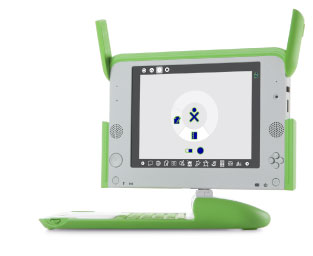
Summarized from the NYT Article by DAVID POGUE, Published: October 4, 2007
On November 12th, you’ll be able to buy a new laptop that’s spillproof, rainproof, dustproof and drop-proof. It’s fanless, it’s silent and it weighs 3.2 pounds. One battery charge will power six hours of heavy activity, or 24 hours of reading. The laptop has a built-in video camera, microphone, memory-card slot, graphics tablet, game-pad controllers and a screen that rotates into a tablet configuration.
It’s an effort by One Laptop Per Child to develop a very low-cost, high-potential, extremely rugged computer for the two billion educationally under-served children in poor countries.
The program is called “Give 1, Get 1” and it works like this. You pay $400 www.xogiving.org. One XO laptop (and a tax deduction) comes to you by Christmas, and a second is sent to a student in a poor country.
THAT's what you should be buying this Christmas! I just bought mine via paypal.
Summarized from the NYT Article by DAVID POGUE, Published: October 4, 2007
On November 12th, you’ll be able to buy a new laptop that’s spillproof, rainproof, dustproof and drop-proof. It’s fanless, it’s silent and it weighs 3.2 pounds. One battery charge will power six hours of heavy activity, or 24 hours of reading. The laptop has a built-in video camera, microphone, memory-card slot, graphics tablet, game-pad controllers and a screen that rotates into a tablet configuration.
It’s an effort by One Laptop Per Child to develop a very low-cost, high-potential, extremely rugged computer for the two billion educationally under-served children in poor countries.
The program is called “Give 1, Get 1” and it works like this. You pay $400 www.xogiving.org. One XO laptop (and a tax deduction) comes to you by Christmas, and a second is sent to a student in a poor country.
THAT's what you should be buying this Christmas! I just bought mine via paypal.
Change is hard for everybody
Change is always difficult and even more so in the technology and consulting game where we need to manage multiple requirements from multiple stakeholders. So it is rather enlightening therefore to compare how different organizations cope. Our pals at ZD net have an interesting post on how Apple, Microsoft and Ubuntu approach perhaps the most troubling change of all to technologists changing your O/S.
This all helps convince me how Agile as a methodology with it's "work from a vision and do the next easiest set of things we can do" approach is going to end up dominating the way we do businesses and the old "build a big heavy plan and then try and live with it".
There is just something so beautiful about living in Agile and delivering the next set of small, incremental changes on a regular basis, knowing you're part of a bigger guiding vision, not worrying too much about everyting that's next until you really have to.
The nicest thing for me about Agile User Experience is that we roll out a lovely carpet of successful options ahead of the development team to help guide them.
Change is always difficult and even more so in the technology and consulting game where we need to manage multiple requirements from multiple stakeholders. So it is rather enlightening therefore to compare how different organizations cope. Our pals at ZD net have an interesting post on how Apple, Microsoft and Ubuntu approach perhaps the most troubling change of all to technologists changing your O/S.
This all helps convince me how Agile as a methodology with it's "work from a vision and do the next easiest set of things we can do" approach is going to end up dominating the way we do businesses and the old "build a big heavy plan and then try and live with it".
There is just something so beautiful about living in Agile and delivering the next set of small, incremental changes on a regular basis, knowing you're part of a bigger guiding vision, not worrying too much about everyting that's next until you really have to.
The nicest thing for me about Agile User Experience is that we roll out a lovely carpet of successful options ahead of the development team to help guide them.
Wednesday, November 07, 2007
Ireland is so hot right now (said in Zoolander voice)
Ireland is now one of the richest countries in the world. These are numbers for the whole populations. It depends how you slice these numbers up, of course. I have heard estimates that on a business scale Ireland has more wealthy people/companies than everywhere but Japan. Ireland produces most of the world's software, having overtaken the US in about 2005. Again the numbers can be hacked around but the basic concepts are true. Ireland's coming!
Social Partnership:
A significant part of Ireland's recent economic success has been attributed to the “Social Partnership” – a formalized dialog between, the state, employers, unions and civil society actors. This dialog produces periodic binding agreements that cover minimum standards in pay, employment conditions, social welfare provision and specific parts of infrastructural development. In June 2006, a new partnership agreement (binding for the next 27 months) entitled Towards 2016 [pdf] was announced, setting the agenda for social and economic development for the next 10 years.
Ireland and the EU:
Ireland's membership of the EU has had a big impact on its political culture. One of the most obvious recent effects has been the influx of migrant workers from the ten EU accession states. An estimated 200,000 people have since moved to Ireland since June 2004 making it one of the largest recipients (per capita) of migrant labor in the EU. This has made a measurable impression upon the social and economic landscape. Ireland has recently opted to retain the work permit system for workers from Bulgaria and Romania when they join the EU.
The 2004 Irish EU Presidency oversaw the agreement of the draft Constitutional Treaty. Following the French and Dutch referendum results, the June 2005 meeting of the European Heads of State, the Irish Government opted for a pause in the ratification process so as to allow time for reflection and debate in each Member State. It was also during Ireland's EU Presidency in 2004 that the EU enlarged to encompass 25 Member States.
And now (6-NOV-07)...Microsoft has confirmed its plans to built a $500,000,000 Data Center at Grange Castle in Dublin Ireland...count those zeros!
"This is the first mega data centre deployment outside the US specifically targeted for the growth and performance of Windows Live services," said John Mangelaars, vice president, Microsoft EMEA Online Services Group.
Those of us who follow these things and have "folks on the ground" know that is no great surprise. Since the harmonization of the Republic of Ireland into Europe and the Euro and the 1998 Peace Agreement in the other country, Northern Ireland, the island of Ireland as a whole has attracted back more of its best and brightest than ever left. When I ran my small web consultancy in Ulster back in 2002 the main issues were lack of broadband infrastructure, lack of market maturity and importantly lack of people to hire. I tried hard on all three areas before returning to a "once in a lifetime" offer from a little outfit called Staples in Boston...but that's a story for another day...
The point here is that now Ireland is BOOMing. It's full (and I mean FULL) of bright, young, native-English-speaking folks who are looking to the US for more inward investment and partnership. I say the US, which has always had a special relationship with Ireland (since we built their country for them ;) now needs to look to their Celtic buddies as the doorway to Europe and drop the stereotypical "old country" and misty-eyed views of Ireland as a nice place to go for a pint or a fight...but they'll keep that on the menu too if it'll make you feel more at home...it's all about hospitality over there ;)
Ireland is now one of the richest countries in the world. These are numbers for the whole populations. It depends how you slice these numbers up, of course. I have heard estimates that on a business scale Ireland has more wealthy people/companies than everywhere but Japan. Ireland produces most of the world's software, having overtaken the US in about 2005. Again the numbers can be hacked around but the basic concepts are true. Ireland's coming!
Social Partnership:
A significant part of Ireland's recent economic success has been attributed to the “Social Partnership” – a formalized dialog between, the state, employers, unions and civil society actors. This dialog produces periodic binding agreements that cover minimum standards in pay, employment conditions, social welfare provision and specific parts of infrastructural development. In June 2006, a new partnership agreement (binding for the next 27 months) entitled Towards 2016 [pdf] was announced, setting the agenda for social and economic development for the next 10 years.
Ireland and the EU:
Ireland's membership of the EU has had a big impact on its political culture. One of the most obvious recent effects has been the influx of migrant workers from the ten EU accession states. An estimated 200,000 people have since moved to Ireland since June 2004 making it one of the largest recipients (per capita) of migrant labor in the EU. This has made a measurable impression upon the social and economic landscape. Ireland has recently opted to retain the work permit system for workers from Bulgaria and Romania when they join the EU.
The 2004 Irish EU Presidency oversaw the agreement of the draft Constitutional Treaty. Following the French and Dutch referendum results, the June 2005 meeting of the European Heads of State, the Irish Government opted for a pause in the ratification process so as to allow time for reflection and debate in each Member State. It was also during Ireland's EU Presidency in 2004 that the EU enlarged to encompass 25 Member States.
And now (6-NOV-07)...Microsoft has confirmed its plans to built a $500,000,000 Data Center at Grange Castle in Dublin Ireland...count those zeros!
"This is the first mega data centre deployment outside the US specifically targeted for the growth and performance of Windows Live services," said John Mangelaars, vice president, Microsoft EMEA Online Services Group.
Those of us who follow these things and have "folks on the ground" know that is no great surprise. Since the harmonization of the Republic of Ireland into Europe and the Euro and the 1998 Peace Agreement in the other country, Northern Ireland, the island of Ireland as a whole has attracted back more of its best and brightest than ever left. When I ran my small web consultancy in Ulster back in 2002 the main issues were lack of broadband infrastructure, lack of market maturity and importantly lack of people to hire. I tried hard on all three areas before returning to a "once in a lifetime" offer from a little outfit called Staples in Boston...but that's a story for another day...
The point here is that now Ireland is BOOMing. It's full (and I mean FULL) of bright, young, native-English-speaking folks who are looking to the US for more inward investment and partnership. I say the US, which has always had a special relationship with Ireland (since we built their country for them ;) now needs to look to their Celtic buddies as the doorway to Europe and drop the stereotypical "old country" and misty-eyed views of Ireland as a nice place to go for a pint or a fight...but they'll keep that on the menu too if it'll make you feel more at home...it's all about hospitality over there ;)
Monday, November 05, 2007
Big methods
So today the great man of usability says: High-Cost Usability Sometimes Makes Sense Summary: Computing the net present value (NPV) lets you estimate the most profitable level of usability investment. For big projects, expensive usability can pay off.
I don't really agree Jakob, much as I adore you and your conferences and your fashionable glamor publicity shots.
Well, ok. I sort of don't agree. I am a strong advocate of the right tool for the job but simply advocating for a single large, monolitic usability service effort is like harking back to a single mainframe for the hardware world. Very appealing in a marketing sense. One machine in one room. Everybody obeys. We move on....hmmmm...
The real world though these days (and it IS an ever more agile or as I like to say "humane design" world) demands fast, powerful services that inter-relate into a community of services and deliver a networked effective value.
So I am for the aggregation of multiple, appropriate, guerrilla or light-weight methods that can be iterated rapidly, assessed, converted into coded solutions and repeated. We still do all the up-front thinking and planning but when it comes to getting it done - Let's just go do it! Learn from any mistakes and Do it again.
So today the great man of usability says: High-Cost Usability Sometimes Makes Sense Summary: Computing the net present value (NPV) lets you estimate the most profitable level of usability investment. For big projects, expensive usability can pay off.
I don't really agree Jakob, much as I adore you and your conferences and your fashionable glamor publicity shots.
Well, ok. I sort of don't agree. I am a strong advocate of the right tool for the job but simply advocating for a single large, monolitic usability service effort is like harking back to a single mainframe for the hardware world. Very appealing in a marketing sense. One machine in one room. Everybody obeys. We move on....hmmmm...
The real world though these days (and it IS an ever more agile or as I like to say "humane design" world) demands fast, powerful services that inter-relate into a community of services and deliver a networked effective value.
So I am for the aggregation of multiple, appropriate, guerrilla or light-weight methods that can be iterated rapidly, assessed, converted into coded solutions and repeated. We still do all the up-front thinking and planning but when it comes to getting it done - Let's just go do it! Learn from any mistakes and Do it again.
Friday, November 02, 2007
OpenSocial by the campfire.
Google and friends (all 200 Million now represented) introduce how open social API will work in developer-speak ;) I still get the nagging feeling that this is less than 1/3 of the final solution. Sure, we've nailed [1] "excited market/ROI potential" and maybe a bit of "distribution" and something open (not proprietary) but what about [2] privacy as my range of once-separate social networks could now be joined up and what about the inter-related issues of identity, reputation and trust and so forth? Then, what about [3] the broader creative user experience that will ensue once all this very different sociological data is being displayed to a global audience all in one place? So, the developers have broken out first; UX-ers where are you?
The next big questions are:
So my position is "open social networking" big whoop! What's next? How do we actually ensure this is not just a huge snowball of "X" rolling down the hill towards the web-using community? How do we find the sociological answer to the underlying sociological problems outlined above and then re-introduce that back into the current furore of unbridled development exuberance?
Google and friends (all 200 Million now represented) introduce how open social API will work in developer-speak ;) I still get the nagging feeling that this is less than 1/3 of the final solution. Sure, we've nailed [1] "excited market/ROI potential" and maybe a bit of "distribution" and something open (not proprietary) but what about [2] privacy as my range of once-separate social networks could now be joined up and what about the inter-related issues of identity, reputation and trust and so forth? Then, what about [3] the broader creative user experience that will ensue once all this very different sociological data is being displayed to a global audience all in one place? So, the developers have broken out first; UX-ers where are you?
The next big questions are:
- If the millions of googlists are already working "at fever pitch" should Microsoft be doing something to the front-end of MOSS?
- Is the web as a collection of "sites" or containers on its death bed? Will we all just collect data from around the web, connect and view it in our own shared comfort "zone" on whatever device we prefer?
So my position is "open social networking" big whoop! What's next? How do we actually ensure this is not just a huge snowball of "X" rolling down the hill towards the web-using community? How do we find the sociological answer to the underlying sociological problems outlined above and then re-introduce that back into the current furore of unbridled development exuberance?
Neudesic Conference 2007 - NuCon

My company's conference http://www.nucon07.com is coming up on November 8th. You should take a look.
My company's conference http://www.nucon07.com is coming up on November 8th. You should take a look.
Curious movements afoot
Not a lot to show here yet but I intend to post regularly from sites round the world on topics of interest in the fields of the internet, user experience, innovation, blogging in general and basically everything else that I deem related ;) in between. For now Open Social and the combined possibilities of solving the privacy and identity problem have me intrigued. Thoughts?
Not a lot to show here yet but I intend to post regularly from sites round the world on topics of interest in the fields of the internet, user experience, innovation, blogging in general and basically everything else that I deem related ;) in between. For now Open Social and the combined possibilities of solving the privacy and identity problem have me intrigued. Thoughts?
Subscribe to:
Posts (Atom)